
Why Is My AC Blowing Warm Air? 10 Common Causes & How to Fix It
Quick Answers
If your AC is blowing warm air, the most common causes are a dirty air filter, incorrect thermostat settings, a tripped breaker, frozen evaporator coils, low refrigerant, or a failed capacitor. Some problems can be fixed in minutes, while others require professional HVAC service.
Table of Contents
- Why Your AC Is Blowing Warm Air
- 10 Common Causes
- DIY Troubleshooting
- When to Call an HVAC Technician
- Repair Costs
- Frequently Asked Questions
- Related Articles
- Schedule Service
1. Why Is My AC Blowing Warm Air?
Few things are more frustrating on a hot Utah summer day than turning on your air conditioner and feeling warm air coming from the vents. While it’s natural to worry that your entire HVAC system has failed, the good news is that warm air doesn’t automatically mean you need a new air conditioner. In fact, many AC cooling problems are caused by relatively simple issues that can often be repaired quickly and affordably.
Your air conditioner works by removing heat from inside your home and transferring it outdoors. When one part of that process isn’t working correctly, your system may continue running but fail to produce cold air. Common causes include a dirty air filter, incorrect thermostat settings, restricted airflow, frozen evaporator coils, electrical component failures, low refrigerant levels, or problems with the outdoor condenser unit. Some of these issues are simple enough for homeowners to check themselves, while others require professional diagnosis and repair.
Don't Panic — Many AC Problems Are Repairable
One of the biggest misconceptions homeowners have is that warm air means they need to replace their entire air conditioning system. While replacement is sometimes the best option for older or severely damaged equipment, many systems simply need a professional repair to restore proper cooling.
At Mr. Good Guy HVAC, we’ve helped countless homeowners who were told they needed a complete replacement when the actual problem was a failed capacitor, clogged drain line, dirty condenser coil, or another repair that cost significantly less than installing a new system. That’s why we believe in diagnosing the problem first and explaining your repair options before recommending replacement.
Why Catching the Problem Early Saves Money
The longer you continue running an air conditioner that’s not cooling properly, the greater the risk of causing additional damage. A simple airflow restriction can eventually freeze the evaporator coil. Low refrigerant can place excessive strain on the compressor, one of the most expensive components in your system. Electrical issues can also worsen over time if they’re ignored.
Addressing the problem early often means a faster repair, lower repair costs, and less chance of a complete system breakdown during the hottest days of the year.
If your air conditioner is blowing warm air, don’t ignore the warning signs. Taking a few minutes to identify the cause—or scheduling a professional inspection—can help restore your comfort, protect your equipment, and potentially save hundreds or even thousands of dollars in future repairs.
Key Takeaway: Most AC systems that blow warm air can be repaired. Common causes include dirty filters, thermostat issues, frozen coils, electrical component failures, or low refrigerant. The sooner the problem is diagnosed, the less likely it is to become a costly repair. Or
Key Takeaway
If your AC is blowing warm air, don’t assume you need a new air conditioner. Many cooling problems are caused by common issues that can often be repaired, including a dirty air filter, incorrect thermostat settings, a dirty outdoor condenser coil, a tripped breaker, frozen evaporator coils, electrical component failures, or low refrigerant.
Start with simple troubleshooting steps like checking your thermostat, replacing your air filter, and verifying your outdoor unit has power. If your system is still not cooling, having the problem diagnosed early can prevent additional damage, reduce repair costs, and help extend the life of your HVAC system.
At Mr. Good Guy HVAC, we believe in honest diagnostics and repair-first solutions. Our goal is to identify the actual problem, explain your options clearly, and help you make the best decision for your home and budget.
- A real photo from one of your service calls (not stock photography whenever possible).
- A short 30–60 second video explaining the issue.
- A simple DIY checklist.
- A “When to Call Us” section.
- A repair cost range.
- Links to related Learning Center articles.
That combination of original media, practical advice, and strong internal linking is much more difficult for competitors to copy and provides genuine value to homeowners.
2. The 10 Most Common Causes
1. Dirty Air Filter
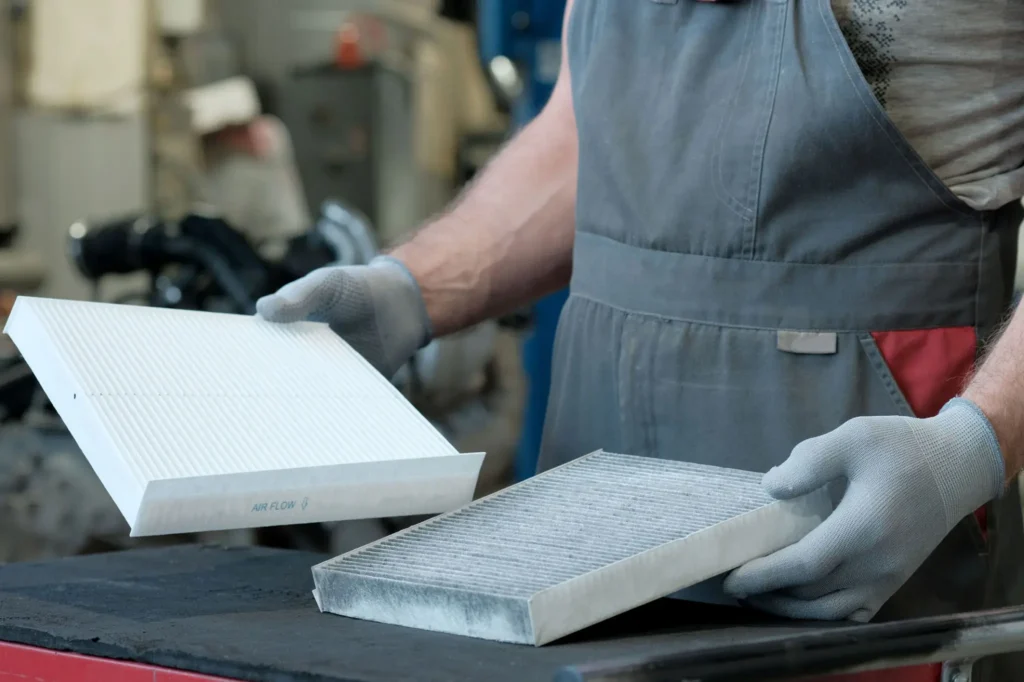
A dirty air filter is one of the most common—and easiest to fix—reasons an air conditioner may stop cooling your home effectively. As dust, dirt, pet hair, and other airborne particles collect on the filter, airflow becomes restricted. Without enough airflow moving across the evaporator coil, your air conditioner can’t remove heat efficiently, causing the air coming from your vents to feel warmer than it should.
The good news is that replacing a dirty filter is an inexpensive maintenance item that many homeowners can do themselves in just a few minutes.
Common Symptoms
- Warm or slightly cool air coming from your vents
- Weak airflow throughout your home
- Your AC runs longer than normal without reaching the thermostat setting
- Higher-than-normal energy bills
- Ice forming on the indoor refrigerant line or evaporator coil
- Excessive dust inside your home
- The air filter appears gray, brown, or clogged with debris
Why It Happens
Every time your HVAC system runs, the air filter captures dust, pollen, pet dander, lint, and other airborne particles to help keep your home’s air clean and protect your HVAC equipment. Over time, those particles build up and restrict airflow.
When airflow becomes too limited, the evaporator coil can become too cold and eventually freeze. A frozen coil can’t absorb heat effectively, which often causes your AC to blow warm air even though the system continues to run.
Most standard 1-inch filters should be inspected every month and replaced every 30–90 days depending on your home’s conditions. Homes with pets, allergies, construction dust, or heavy system use may require more frequent filter changes.
DIY Tip
Turn your HVAC system off, remove the existing filter, and hold it up to a light source. If little or no light passes through the filter, it’s time for a replacement. Always install the new filter with the airflow arrow pointing toward the furnace or air handler.
When to Call Mr. Good Guy HVAC
If you’ve replaced the air filter and your AC is still blowing warm air after several hours of operation, the problem is likely something more than restricted airflow. Our technicians can perform a complete system inspection to identify the underlying issue and recommend the most cost-effective repair.
➡️ Continue Reading: How Often Should You Change Your HVAC Air Filter? (HVAC Learning Center)
📅 Need AC Repair? Schedule an Appointment with Mr. Good Guy HVAC Today.
2. Incorrect Thermostat Settings
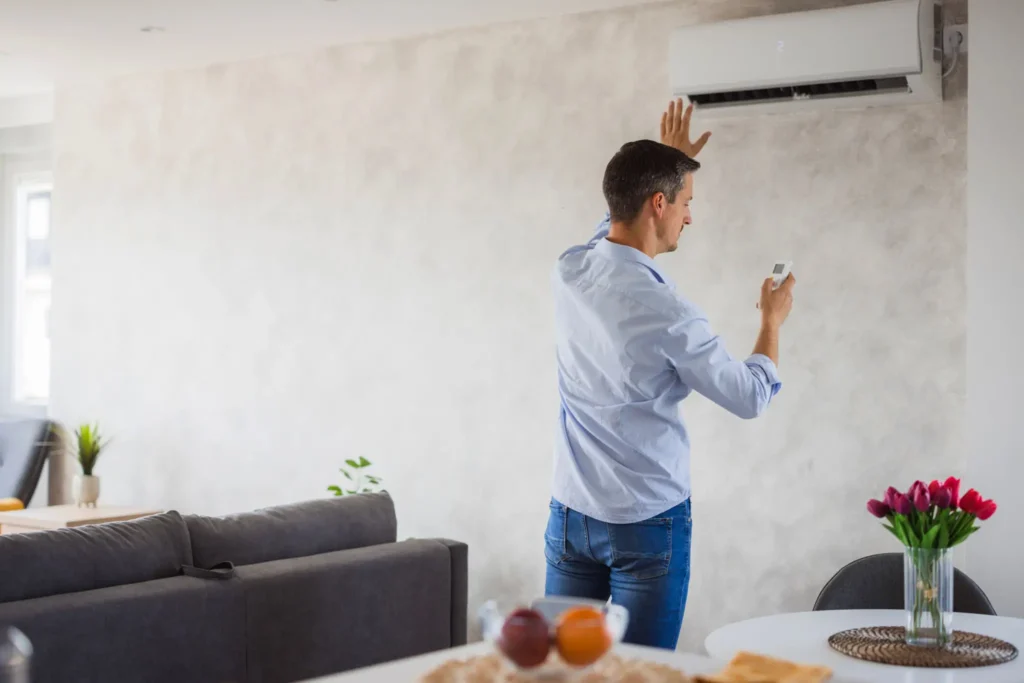
Sometimes the solution to an air conditioner blowing warm air is much simpler than homeowners expect. Incorrect thermostat settings are one of the most common reasons an AC system doesn’t cool properly, especially at the beginning of the cooling season or after a power outage, battery replacement, or accidental setting change.
Before assuming your air conditioner needs a repair, take a few minutes to verify that your thermostat is configured correctly. A simple adjustment could restore cool air without the need for a service call.
Common Symptoms
- Warm air blowing from the vents
- The indoor fan is running, but the outdoor AC unit isn’t operating
- The thermostat display is blank or unresponsive
- The system won’t reach the temperature you’ve selected
- The fan runs continuously without producing cold air
- The thermostat is set to Heat, Off, or Fan On instead of Cool and Auto
Why It Happens
Modern programmable and smart thermostats offer many settings designed to improve comfort and energy efficiency. However, it’s easy to accidentally change a setting without realizing it.
Some of the most common issues include:
- The thermostat is accidentally set to Heat instead of Cool.
- The fan is set to On instead of Auto, causing the blower to circulate room-temperature air even when the air conditioner isn’t actively cooling.
- The desired temperature is set higher than the current room temperature, so the AC never receives a signal to turn on.
- Weak or dead thermostat batteries prevent the thermostat from communicating with your HVAC system.
- A recent power outage or electrical interruption reset the thermostat’s programming.
Fortunately, these issues are often quick and easy to correct.
DIY Fix
Before calling for service, try these simple steps:
✅ Verify the thermostat is set to Cool.
✅ Set the fan to Auto instead of On.
✅ Lower the temperature setting at least 3–5 degrees below the current room temperature.
✅ Replace the thermostat batteries if your model uses them.
✅ Wait 5–10 minutes to allow built-in compressor protection delays to expire before expecting the system to start.
If your outdoor unit starts and cold air begins flowing, you’ve likely solved the problem without needing a repair.
When to Call Mr. Good Guy HVAC
If your thermostat appears to be set correctly but your air conditioner is still blowing warm air, the issue may be electrical, mechanical, or related to refrigerant levels. Our experienced technicians can inspect your thermostat, verify it’s communicating properly with your HVAC system, and diagnose the underlying problem quickly and honestly.
At Mr. Good Guy HVAC, we believe in repairing problems whenever possible before recommending equipment replacement, helping homeowners make informed decisions without unnecessary expenses.
➡️ Continue Reading: How to Troubleshoot Your HVAC Thermostat (HVAC Learning Center)
📅 Still Not Cooling? Schedule Your Appointment AC Repair with Mr. Good Guy HVAC Today.
3. Dirty Outdoor Condenser Coil
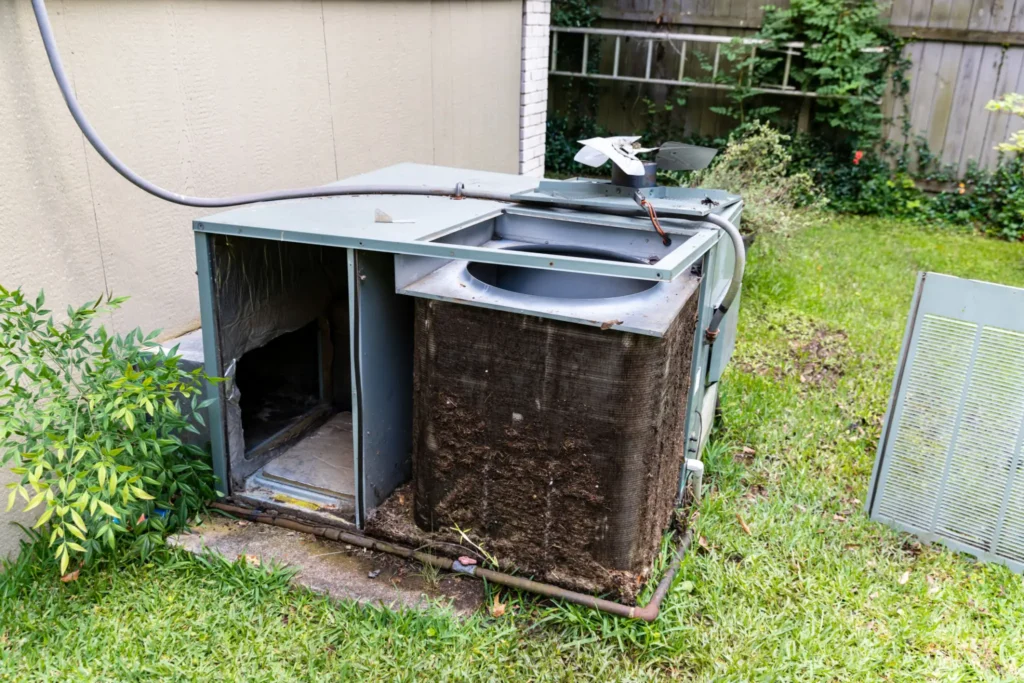
Your outdoor air conditioning unit, also called the condenser, plays a critical role in keeping your home cool. Its job is to release the heat removed from inside your home into the outside air. Over time, dirt, dust, pollen, cottonwood, grass clippings, leaves, and other debris can build up on the condenser coils, making it much harder for your system to release heat efficiently.
When the condenser coil becomes dirty, your air conditioner has to work much harder to cool your home. As a result, you may notice warm air coming from your vents, longer cooling cycles, higher energy bills, or reduced comfort inside your home.
Why It Happens
Your outdoor condenser is exposed to the elements 24 hours a day. Throughout the year, airborne dirt, dust, lawn debris, weeds, and even pet hair can collect on the aluminum fins surrounding the unit. If shrubs or plants grow too close to the condenser, airflow becomes even more restricted.
Without proper airflow, the condenser can’t release heat effectively. Instead of cooling your home efficiently, your air conditioner runs longer, uses more electricity, and places additional stress on important components like the compressor.
The good news is that a dirty condenser coil is a common maintenance issue—not necessarily a sign that your air conditioner is failing.
Don’t Panic — This Is Often Preventable
Many homeowners assume their air conditioner needs to be replaced when it starts blowing warm air. In reality, a dirty condenser coil is often one of the simplest problems to correct. Professional cleaning can frequently restore proper airflow and improve cooling performance without replacing expensive equipment.
Regular maintenance and keeping the area around your outdoor unit clean can significantly improve efficiency and extend the life of your HVAC system.
Why Catching It Early Saves Money
Ignoring a dirty condenser coil can lead to more expensive repairs over time. As your system struggles to release heat, it runs longer and puts extra strain on the compressor—the heart of your air conditioner and one of the most costly components to replace.
Cleaning the condenser coil before excessive buildup occurs can:
- Improve cooling performance
- Lower your monthly energy bills
- Reduce wear on your compressor
- Help prevent unexpected breakdowns
- Extend the lifespan of your air conditioning system
Routine HVAC maintenance is one of the easiest and most cost-effective ways to protect your investment and keep your home comfortable all summer long.
➡️ Continue Reading: How to Clean Your Outdoor AC Condenser Safely (HVAC Learning Center)
📅 Need Professional AC Maintenance or Repair? Schedule an Appointment with Mr. Good Guy HVAC Today.
4. Tripped Circuit Breaker
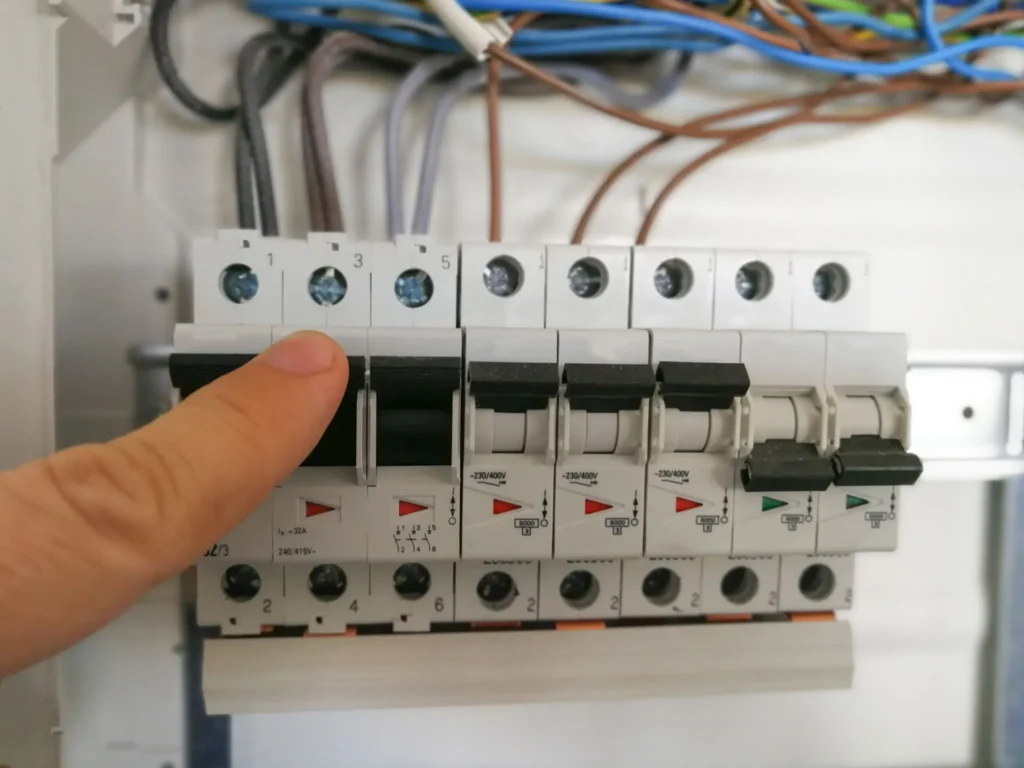
Sometimes the reason your air conditioner is blowing warm air has nothing to do with the AC unit itself. A tripped circuit breaker can shut off power to either the indoor air handler, the outdoor condenser, or both. When this happens, your thermostat may appear to be working, and you may even feel air coming from the vents, but your system won’t be able to cool your home properly.
A tripped breaker doesn’t always mean there’s a serious problem. Occasionally, it can happen after a power outage, electrical surge, or temporary overload. However, if the breaker continues to trip, it’s usually a sign of an underlying electrical or mechanical issue that should be diagnosed by a qualified HVAC technician.
Common Symptoms
- Warm air blowing from the vents
- The thermostat is on, but the outdoor AC unit isn’t running
- The indoor blower runs, but there’s no cooling
- The outdoor condenser is completely silent
- The AC starts briefly and then shuts off
- The circuit breaker for the air conditioner is in the OFF or middle (tripped) position
Why It Happens
Your HVAC system uses dedicated electrical circuits to protect expensive components from damage. If too much electrical current flows through the circuit, the breaker automatically shuts off power to prevent overheating or electrical hazards.
A breaker may trip because of:
- A temporary power surge or outage
- An overloaded electrical circuit
- A failing capacitor
- A shorted compressor or fan motor
- Loose or damaged electrical wiring
- An aging breaker that no longer functions properly
While a single trip after a storm isn’t usually cause for concern, repeated trips indicate that something isn’t operating correctly and should be inspected.
DIY Fix
Before scheduling service, you can safely perform a few simple checks:
✅ Verify your thermostat is set to Cool.
✅ Locate your home’s electrical panel.
✅ Check whether the AC breaker is in the tripped (middle) position.
✅ If it has tripped once, reset it by turning it completely OFF, then firmly back ON.
✅ Wait 5–10 minutes to see if your system begins cooling normally.
Important: If the breaker trips again, do not continue resetting it. Repeatedly resetting a breaker can cause additional damage to your HVAC system and may create a safety hazard.
When to Call Mr. Good Guy HVAC
If your breaker trips more than once, your outdoor unit won’t start, or your air conditioner continues blowing warm air after resetting the breaker, it’s time for a professional inspection.
Our experienced technicians will safely diagnose the cause of the electrical problem, inspect your HVAC components, and explain your repair options before any work begins. Whether it’s a failed capacitor, faulty contactor, damaged wiring, or another issue, we’ll provide honest recommendations and upfront pricing to get your system back up and running.
⚠️ Safety Tip: If your AC breaker trips repeatedly, smells burnt, or you notice sparking, don’t continue resetting it. Turn the system off and schedule professional service. Repeated breaker trips are a warning sign that should never be ignored.
➡️ Continue Reading: Why Does My AC Circuit Breaker Keep Tripping? (HVAC Learning Center)
📅 Need Fast AC Repair? Schedule an Appointment with Mr. Good Guy HVAC Today.
5. Frozen Evaporator Coil
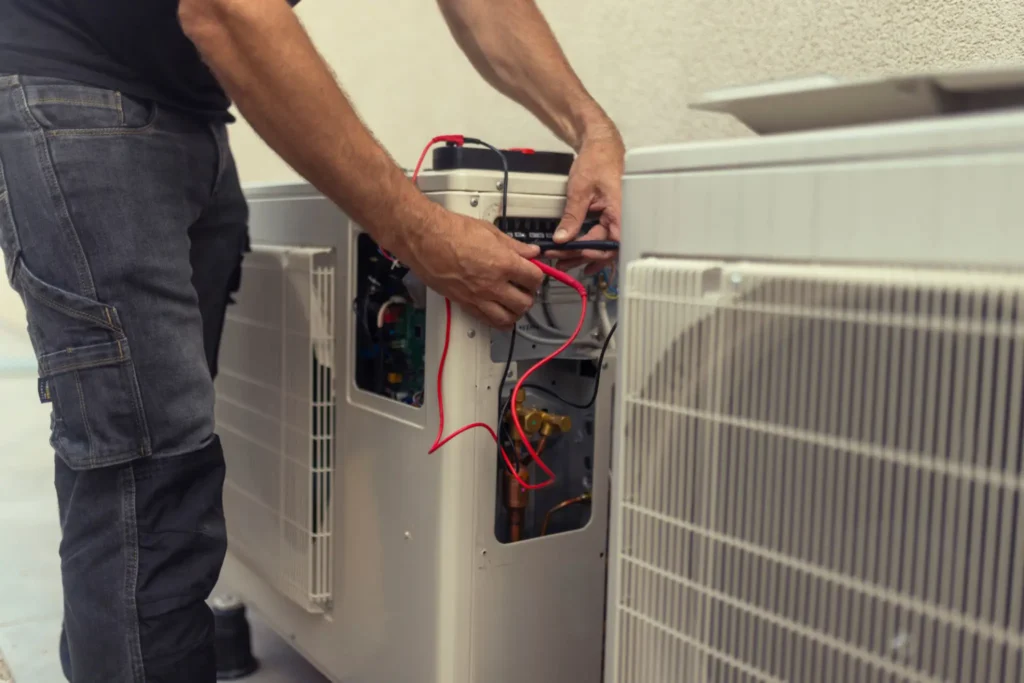
A frozen evaporator coil is one of the most common reasons an air conditioner stops cooling and begins blowing warm air. It may seem strange that a system designed to create cold air can freeze, but your AC relies on the correct balance of airflow, refrigerant, and temperature to operate properly.
When the evaporator coil freezes, ice builds up on the coil and prevents it from absorbing heat from the air inside your home. Instead of cooling your house, your air conditioner may continue running while producing little or no cool air.
The good news is that a frozen coil does not always mean your AC system is failing. Many causes are simple maintenance issues, while others require professional diagnosis to prevent damage to expensive components.
Common Symptoms
Signs that your AC evaporator coil may be frozen include:
- Warm air blowing from your vents
- Ice buildup on the copper refrigerant line or indoor coil
- Reduced airflow coming from your vents
- The AC runs continuously but doesn’t cool your home
- Water leaking around your indoor unit after the ice melts
- Higher energy bills from longer cooling cycles
- The outdoor unit is running, but your home temperature isn’t dropping
If you notice ice on your AC system, it’s important to address the problem rather than continuing to run the equipment.
Why It Happens
Your evaporator coil freezes when something prevents your HVAC system from maintaining the proper temperature balance. The most common causes include:
Dirty Air Filter
A clogged air filter restricts airflow across the evaporator coil. When not enough warm air passes over the coil, the temperature drops too low and ice can begin forming.
Blocked or Restricted Airflow
Closed vents, dirty ductwork, or blower motor issues can reduce airflow and cause the coil to freeze.
Low Refrigerant
Low refrigerant levels are often caused by a leak. When refrigerant is low, the pressure inside the system changes, causing the evaporator coil temperature to drop below freezing.
Dirty Evaporator Coil
Dust and buildup on the indoor coil can prevent proper heat transfer and contribute to freezing.
Mechanical or Electrical Problems
Issues such as a failing blower motor, faulty sensors, or other component failures can affect airflow and system operation.
DIY Fix
If your AC coil is frozen, follow these steps:
✅ Turn your AC system off. Continuing to run a frozen system can damage the compressor.
✅ Set your thermostat to Fan Only. This can help circulate warm air and speed up the thawing process.
✅ Replace a dirty air filter. A clogged filter is one of the most common causes of frozen coils.
✅ Check your vents. Make sure supply and return vents are open and not blocked by furniture or rugs.
✅ Allow the ice to fully melt. This may take several hours depending on how much ice has formed.
Once the ice has completely melted, turn your system back to cooling and monitor its performance.
Important: Do not try to scrape ice off the coil or use sharp objects to remove buildup. This can damage the delicate aluminum fins and create a more expensive repair.
When to Call Mr. Good Guy HVAC
If your AC freezes again after replacing the filter or improving airflow, there is likely an underlying problem that requires professional diagnosis.
Our technicians can inspect your entire cooling system, check airflow, test refrigerant levels, inspect electrical components, and identify the actual cause of the problem. A frozen coil can sometimes be an early warning sign of a larger issue, and catching it early can help prevent compressor damage.
At Mr. Good Guy HVAC, we believe homeowners deserve honest answers—not unnecessary replacements. We’ll explain what we find, provide repair options, and help you make the best decision for your home.
➡️ Continue Reading: Why Is My AC Freezing Up? Common Causes & Solutions (HVAC Learning Center)
📅 Need Help With a Frozen AC Coil? Schedule an Appointment with Mr. Good Guy HVAC Today.
6. Low Refrigerant
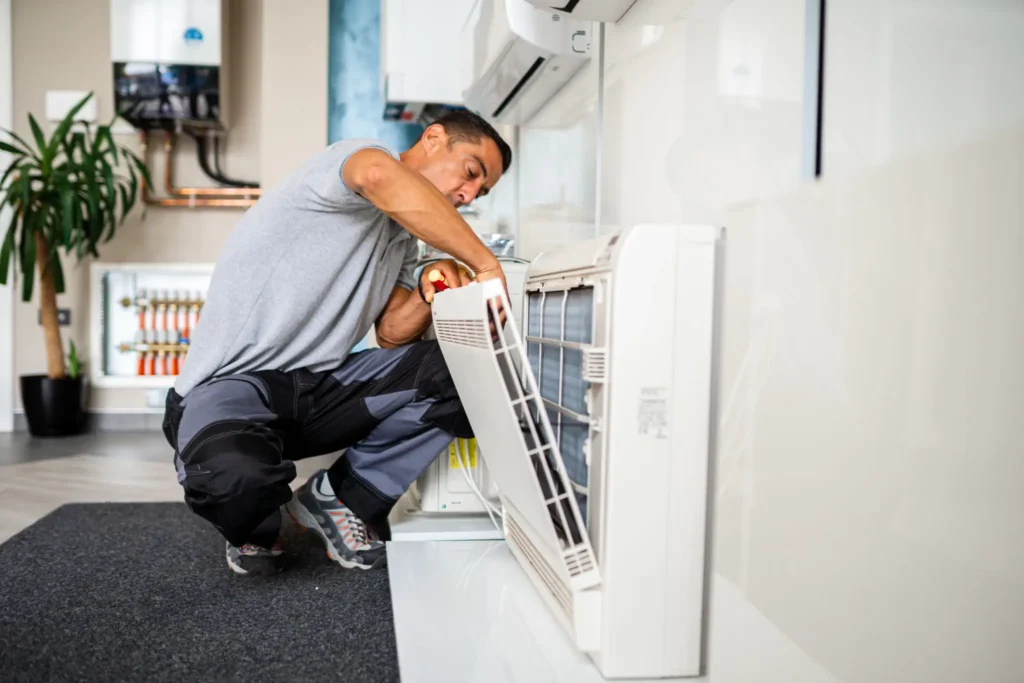
Low refrigerant is another common reason an air conditioner may stop cooling properly and begin blowing warm air. Many homeowners assume that refrigerant is something an AC system “uses up” over time like gasoline, but that is not how it works. A properly operating air conditioner should maintain the same refrigerant level throughout its lifespan.
If your system is low on refrigerant, it usually means there is a leak somewhere in the refrigerant lines, indoor coil, outdoor condenser, or another component of the system. Adding refrigerant without finding and repairing the leak may provide temporary cooling, but the problem will return.
The good news is that low refrigerant can often be repaired when diagnosed early. Addressing the issue quickly can help prevent additional stress on your compressor and avoid more expensive repairs in the future.
Common Symptoms
Signs your AC may be low on refrigerant include:
- Warm air blowing from your vents
- Your AC runs continuously but struggles to cool your home
- Ice forming on the refrigerant line or evaporator coil
- Weak cooling performance
- Longer cooling cycles
- Higher-than-normal energy bills
- A hissing or bubbling sound near refrigerant lines
- The outdoor unit is running, but the home temperature is not decreasing
Because these symptoms can also be caused by other issues, proper diagnosis is important before adding refrigerant or replacing components.
Why It Happens
The most common cause of low refrigerant is a refrigerant leak. Unlike a filter that gets dirty or a capacitor that wears out, refrigerant does not naturally disappear from your system.
Leaks can develop because of:
Age and Wear
Over many years, vibration, corrosion, and normal system operation can weaken refrigerant lines, coils, and connections.
Damaged Refrigerant Lines
Copper refrigerant lines can sometimes develop small leaks due to damage, corrosion, or improper installation.
Coil Leaks
The indoor evaporator coil or outdoor condenser coil can develop leaks over time, especially as equipment ages.
Installation Issues
Improper installation, damaged connections, or poor brazing during installation can contribute to refrigerant loss.
Environmental Factors
Utah’s temperature swings, outdoor exposure, and seasonal changes can contribute to wear on HVAC components over time.
DIY Fix
Unlike a dirty filter or thermostat setting, low refrigerant is not a do-it-yourself repair.
Homeowners should not attempt to add refrigerant themselves. Refrigerant handling requires specialized tools, training, and certification. Adding refrigerant without fixing the leak can:
- Hide the real problem
- Cause additional system damage
- Reduce efficiency
- Create future breakdowns
- Result in unnecessary repair costs
What you can do:
✅ Check and replace your air filter.
✅ Confirm your thermostat settings are correct.
✅ Inspect your outdoor unit for visible damage or ice buildup.
✅ Turn off your system if it is heavily iced over to prevent compressor damage.
When to Call Mr. Good Guy HVAC
If your AC is blowing warm air, freezing up, or running constantly without cooling your home, it’s time for a professional diagnosis.
Our technicians can properly test your system, check refrigerant pressures, inspect for possible leaks, and determine the actual cause of the problem. If refrigerant is low, we will explain your options and recommend the most cost-effective solution based on your system’s age, condition, and repair needs.
At Mr. Good Guy HVAC, we believe in honest recommendations. We don’t simply add refrigerant and send you on your way—we help identify why the refrigerant was low in the first place so you can make an informed decision.
➡️ Continue Reading: Why Is My AC Freezing Up? Common Causes & Solutions (HVAC Learning Center)
📅 Need AC Repair? Schedule an Appointment with Mr. Good Guy HVAC Today.
7. Failed Capacitor
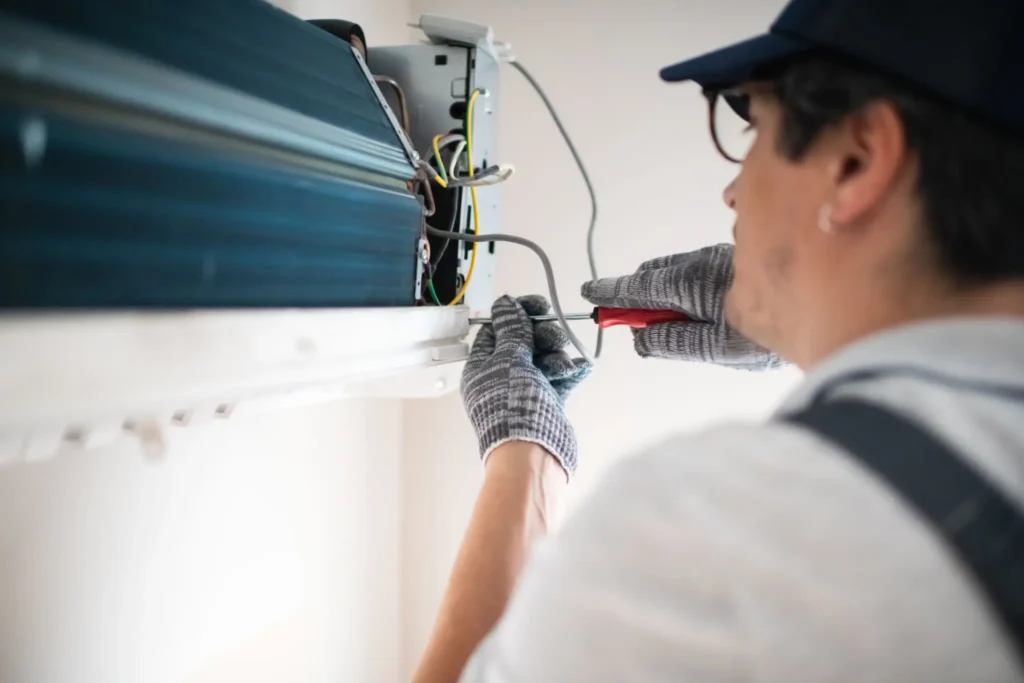
Failed Capacitor
A failed capacitor is one of the most common reasons an air conditioner suddenly stops cooling, especially during the hottest days of summer. The capacitor provides the electrical boost needed to start and run your AC’s compressor and fan motors. When it fails, your system may struggle to start or stop cooling altogether.
Symptoms
- Warm air blowing from your vents
- Outdoor unit humming but the fan isn’t spinning
- AC struggles to start or won’t turn on
- System frequently trips the breaker
- Clicking or buzzing sounds from the outdoor unit
- Air conditioner turns on and off repeatedly (short cycling)
Why It Happens
Capacitors naturally wear out over time due to heat, electrical stress, and normal use. In Utah’s hot summers, prolonged high temperatures can significantly shorten a capacitor’s lifespan. Power surges, aging equipment, and excessive system cycling can also cause a capacitor to fail unexpectedly.
DIY Fix
There is no safe DIY repair for a failed capacitor because it stores high-voltage electricity even after the power has been turned off. Attempting to handle one without the proper training can result in serious injury.
However, you can:
- Check that your thermostat is set to Cool.
- Verify the circuit breaker hasn’t tripped.
- Listen for a humming sound from the outdoor unit.
- Turn the system off if the fan isn’t spinning to prevent additional damage to the compressor.
If these checks don’t restore cooling, it’s time for a professional diagnosis.
When to Call Mr. Good Guy HVAC
If your air conditioner is humming, won’t start, or is blowing warm air, contact Mr. Good Guy HVAC right away. Our certified technicians can quickly test the capacitor, inspect the electrical components, and replace the failed part if needed. Prompt repairs can often prevent costly compressor damage and get your home comfortable again. We proudly provide fast, reliable AC repair throughout Utah County and Salt Lake County.
8. Bad Contactor
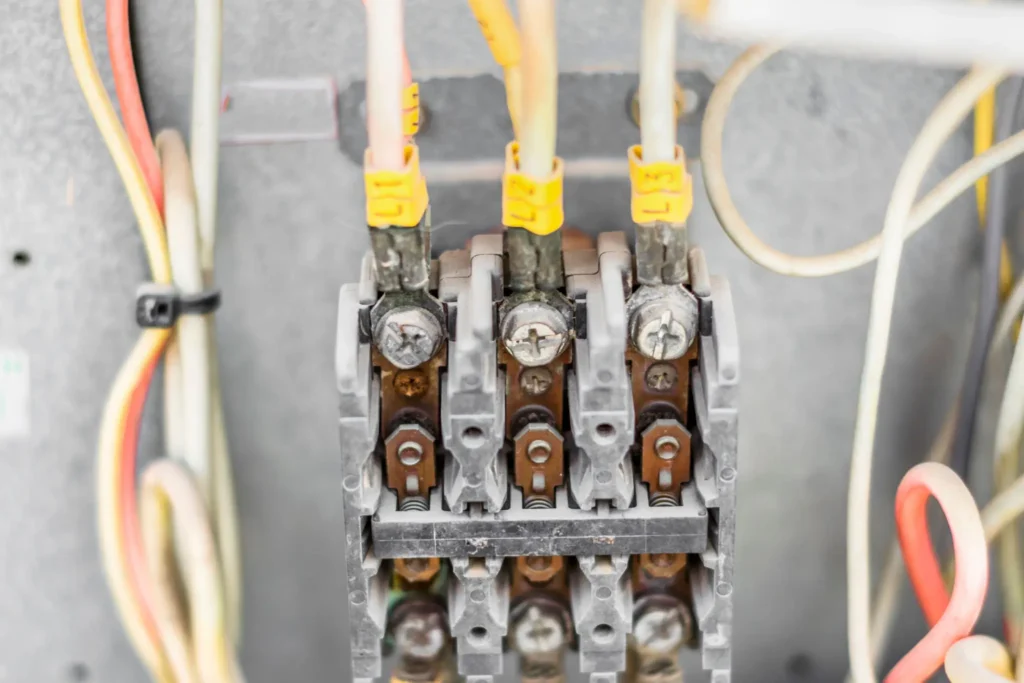
Bad Contactor
The contactor is an electrical switch inside your outdoor AC unit that controls the flow of power to the compressor and condenser fan motor. Every time your thermostat calls for cooling, the contactor engages to start the system. When it becomes worn or damaged, your air conditioner may stop cooling, run intermittently, or fail to turn on altogether.
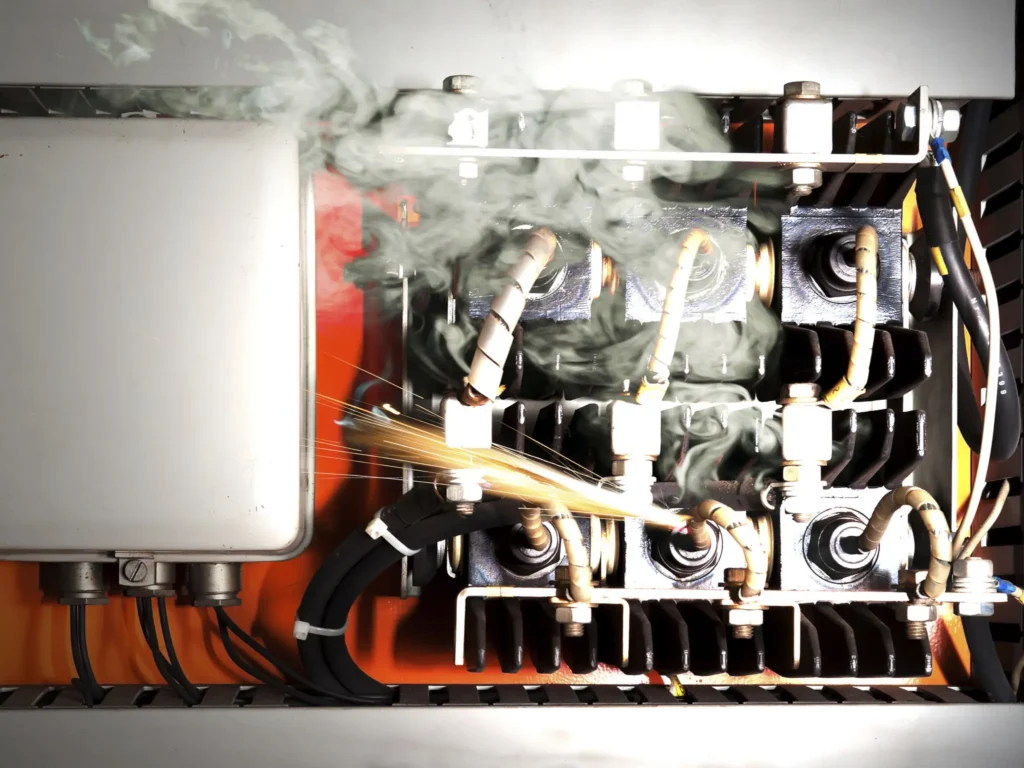
Symptoms
- Air conditioner won’t turn on
- Warm air blowing from the vents
- Outdoor unit won’t start or runs intermittently
- Clicking or chattering noises from the outdoor unit
- Condenser fan or compressor fails to start
- System runs continuously and won’t shut off (contacts stuck closed)
Why It Happens
Over time, the contactor’s electrical contacts wear down from thousands of on-and-off cycles. Dirt, insects, moisture, corrosion, and power surges can also cause the contacts to pit, stick, or burn. Utah’s summer heat and frequent AC operation can accelerate this wear, making the contactor one of the more common electrical components to fail.
DIY Fix
A contactor should not be repaired or replaced by a homeowner because it carries high-voltage electricity.
Before calling for service, you can:
- Verify your thermostat is set to Cool and the temperature is below the current room temperature.
- Check that the circuit breakers for both the indoor and outdoor units haven’t tripped.
- Listen for a clicking sound from the outdoor unit when the thermostat calls for cooling.
- Turn the system off if you notice buzzing, burning smells, or continuous clicking to help prevent further electrical damage.
If these steps don’t restore cooling, professional service is recommended.
When to Call Mr. Good Guy HVAC
If your AC won’t start, runs inconsistently, or is blowing warm air, Mr. Good Guy HVAC can quickly diagnose the problem. Our experienced technicians will inspect the contactor and all related electrical components, replace any worn parts, and verify your system is operating safely and efficiently. We provide prompt, reliable AC repair throughout Utah County and Salt Lake County, helping homeowners stay comfortable all summer long.
9. Compressor Problems
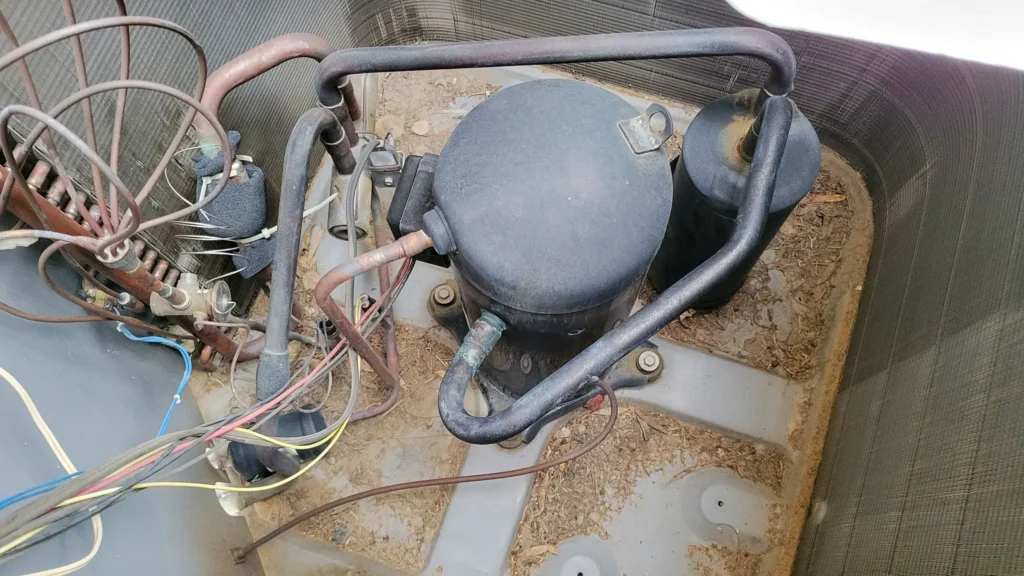
Compressor Problems
The compressor is the heart of your air conditioning system. It circulates refrigerant between the indoor and outdoor units, allowing your home to stay cool and comfortable. If the compressor fails or isn’t operating properly, your AC may run but produce little to no cold air. Because the compressor is one of the most expensive HVAC components, addressing problems early can help prevent a complete system failure.
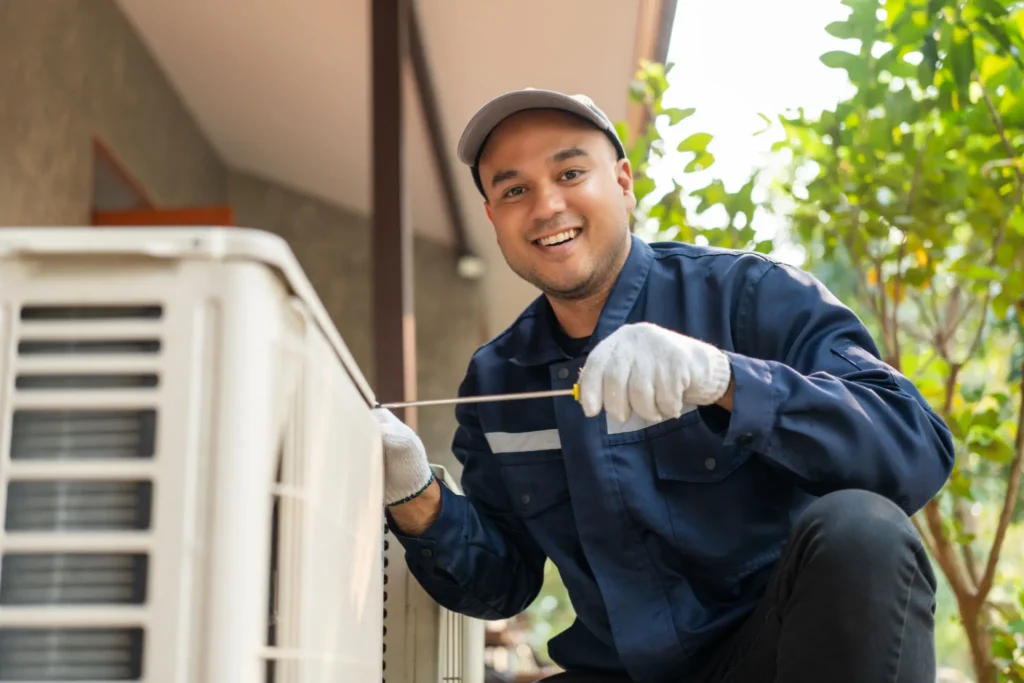
Symptoms
- Warm air blowing from the vents
- Outdoor unit is running but not cooling
- Loud buzzing, grinding, rattling, or knocking noises
- Circuit breaker repeatedly trips
- AC struggles to start or won’t start at all
- Higher-than-normal energy bills
- System frequently shuts off or short cycles
Why It Happens
Compressor problems can develop from several underlying issues, including:
- Low refrigerant caused by a leak
- Electrical failures such as a bad capacitor or contactor
- Dirty condenser coils causing the compressor to overheat
- Lack of routine maintenance
- Age and normal wear
- Voltage fluctuations or power surges
Many compressor failures begin as a smaller issue that goes unaddressed, making early diagnosis critical.
DIY Fix
There are no safe DIY repairs for a compressor, but you can perform a few basic checks:
- Verify your thermostat is set to Cool.
- Check your air filter and replace it if it’s dirty.
- Inspect the circuit breaker for the indoor and outdoor units.
- Make sure the outdoor condenser is free of leaves, grass, and debris.
- Turn the system off if you hear loud noises or notice the breaker repeatedly tripping to help prevent additional damage.
If your AC still isn’t cooling, professional service is needed.
When to Call Mr. Good Guy HVAC
If you suspect a compressor problem, contact Mr. Good Guy HVAC as soon as possible. Our certified technicians use professional diagnostic equipment to determine whether the issue is the compressor itself or another component, such as the capacitor, contactor, or refrigerant system. We’ll explain your repair options and help you determine whether repairing or replacing the system is the most cost-effective solution. We proudly provide expert AC repair throughout Utah County and Salt Lake County.
10. Electrical Problems
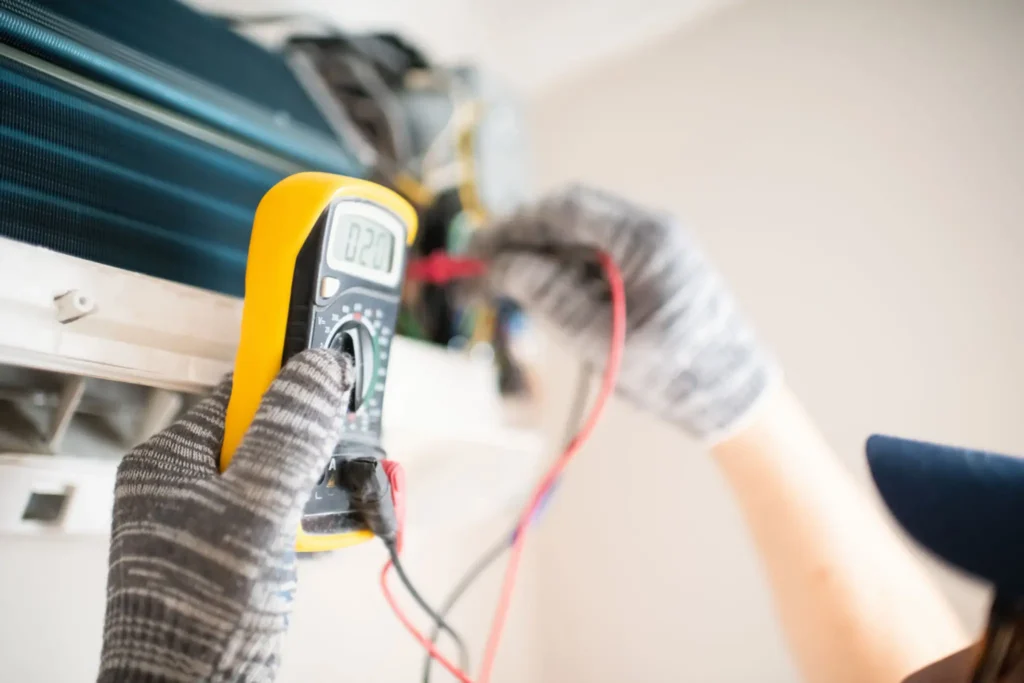
Electrical Problems
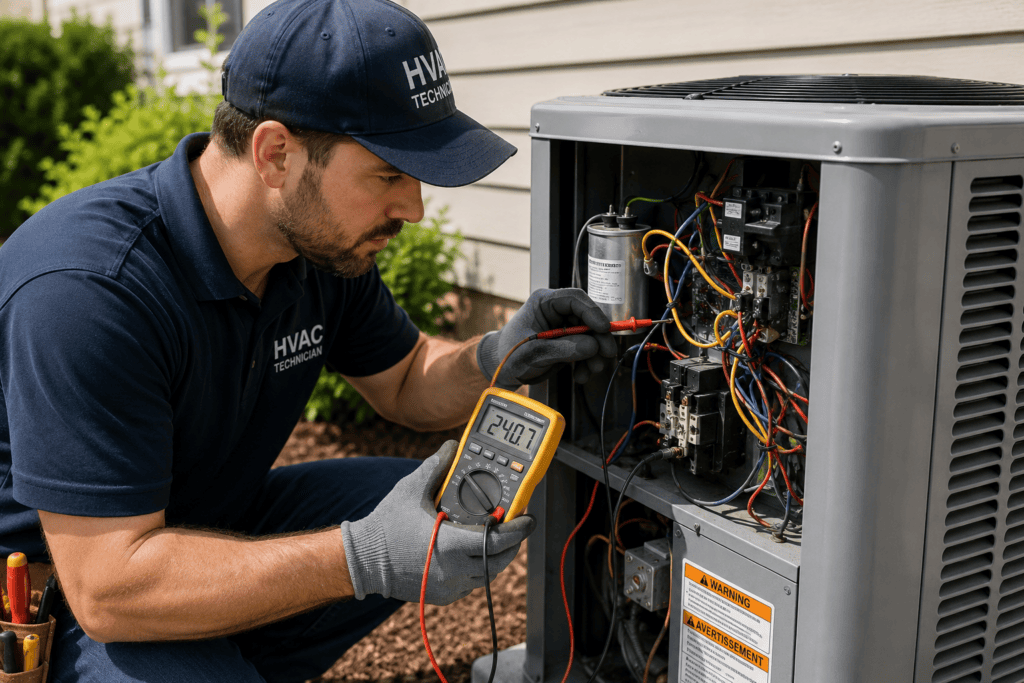
Your air conditioning system relies on a network of electrical components—including wiring, relays, fuses, capacitors, contactors, and circuit boards—to operate safely and efficiently. When one of these components fails, your AC may stop cooling, fail to start, or operate intermittently. Electrical issues should be addressed promptly to prevent further damage and ensure safe operation.
Symptoms
- Air conditioner won’t turn on
- Warm air blowing from the vents
- Circuit breaker repeatedly trips
- Burning smell coming from the unit
- Buzzing, clicking, or humming noises
- AC starts and stops unexpectedly
- Thermostat has power, but the system doesn’t respond
- Outdoor unit won’t run while the indoor fan continues to operate
Why It Happens
Electrical problems can occur for several reasons, including:
- Loose or damaged wiring
- Failed capacitors or contactors
- Blown fuses
- Faulty control boards or relays
- Power surges or voltage fluctuations
- Rodent damage to wiring
- Moisture or corrosion inside electrical components
- Normal wear and tear as the system ages
Routine maintenance can often identify worn electrical components before they cause a complete system failure.
DIY Fix
While homeowners should never attempt electrical repairs inside an HVAC system, you can safely perform a few basic checks:
- Verify the thermostat is set to Cool.
- Check your home’s electrical panel for a tripped breaker.
- Make sure the outdoor disconnect switch is in the ON position.
- Replace thermostat batteries if applicable.
- Turn the system off immediately if you notice a burning smell, sparks, or repeated breaker trips.
If these steps don’t restore operation, professional service is recommended.
When to Call Mr. Good Guy HVAC
If your air conditioner won’t start, repeatedly trips the breaker, or shows signs of an electrical problem, contact Mr. Good Guy HVAC right away. Our experienced technicians can safely diagnose electrical faults, repair damaged components, and ensure your system is operating safely and efficiently. We proudly provide fast, dependable AC repair throughout Utah County and Salt Lake County, helping homeowners restore comfort with reliable, long-lasting repairs.
DIY Troubleshooting
A checklist homeowners can follow:
✅ Check thermostat
✅ Replace filter
✅ Check breaker
✅ Inspect outdoor unit
✅ Make sure supply vents are open
✅ Remove debris
** NOTE: avoid electrical work or refrigerant handling.
When Should You Call an HVAC Technician?
Warning signs like:
- Warm air continues after basic checks
- Ice on refrigerant lines
- Burning smell
- Loud buzzing
- Breaker trips repeatedly
- Water leaks
Repair Cost Guide
| Problem | Typical Repair Range |
| Dirty Filter | $20–$50 |
| Capacitor | $150–$350 |
| Contactor | $175–$400 |
| Refrigerant Leak | $75–$1,500+ |
| Compressor | $3,500+ depending on the seer rating and the tonnage of the compressor |
* prices vary by system type and the specific repair needed.